SocietyXpress - 0-to-1 Marketplace Build
Solving the cold-start problem in hyperlocal services: building both sides of a marketplace from scratch
Overview
A case study in solving the hardest product problem: building a two-sided marketplace from zero. While my enterprise work demonstrates scale and AI depth, SocietyXpress proves I can identify a real-world problem, design the full product system, solve the cold-start problem, build supply-side tooling, and ship a revenue-generating product - skills that don't show up in enterprise PM roles but define whether a product leader can truly build.
Why This Case Study Matters
Enterprise PMs ship features within existing products, established distribution, and built-in demand. This case study demonstrates a fundamentally different skill: building an entire product system from nothing. No existing user base. No engineering team. No brand. The core challenge was the marketplace cold-start problem - residents won't order if there are no partners, and partners won't join if there are no orders. Every decision had to solve for both sides simultaneously.
The Product Problem
Hyperlocal home services in India are dominated by informal, unreliable providers with no quality assurance, no tracking, and no structured economics for workers. The challenge wasn't building an app - it was designing a system where supply-side incentives, demand-side trust, and operational logistics all reinforce each other from day one.
Solving the Cold-Start Problem
Instead of launching city-wide (the typical marketplace mistake), I designed a density-first GTM strategy constrained to individual residential societies. This created artificial scarcity and high service reliability within a tight geographic boundary:
- Supply-first: Onboarded partners with guaranteed minimum earnings before any customer demand existed
- Density over breadth: Focused on 2 societies (1,000+ households) rather than spreading across Hyderabad
- Community trust: Used society-level identity (Tower + Unit) for onboarding - no anonymous transactions
- Demand flywheel: Word-of-mouth within a closed community created organic growth without paid acquisition
Supply-Side Product Design
The partner-facing product was as critical as the customer app. Most marketplace failures are supply-side failures. I designed the partner system to solve for earnings visibility, workload autonomy, and trust:
- Global pickup queue with self-serve "Assign to Me" - partners choose orders that fit their capacity, not assigned top-down
- Per-order earning visibility before acceptance - partners see exactly what they'll earn, eliminating the opaque gig-economy model
- Multi-role support (Pickup, Ironing, Delivery, or combined) - partners flex across roles based on availability
- Transparent earnings dashboard (Total, Pending, Monthly) - building financial predictability for gig workers
System Design Decisions
Every product architecture choice was driven by the constraint of operating both sides of the marketplace with minimal overhead:
- 5-stage order lifecycle (Pending → Picked Up → In Progress → Ready → Delivered) - each transition triggers partner actions and customer notifications, creating a feedback loop that builds trust
- Tiered pricing (Normal/Express x Normal/Steam) - designed to segment demand and optimize partner utilization across time slots
- Platform-agnostic core: Web app + Android APK distribution - pragmatic choice for a market where Play Store friction kills conversion
What This Proves
This isn't a consumer app story. It's proof of a product skillset that enterprise roles rarely test: Can you identify a real problem? Can you design the incentive system, not just the interface? Can you solve for supply and demand simultaneously? Can you ship something that generates real revenue without a team, a brand, or a budget? The answer is SocietyXpress - 800+ customers, positive unit economics, and a platform designed to extend into new verticals without rebuilding.
App Screenshots
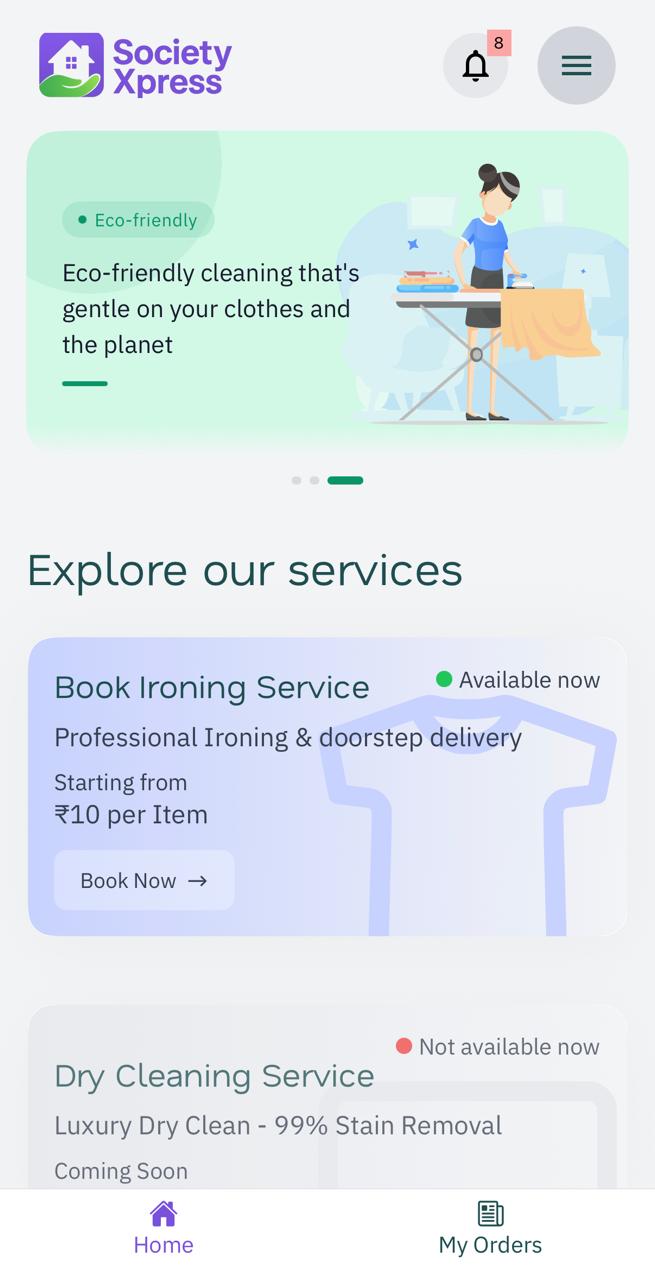
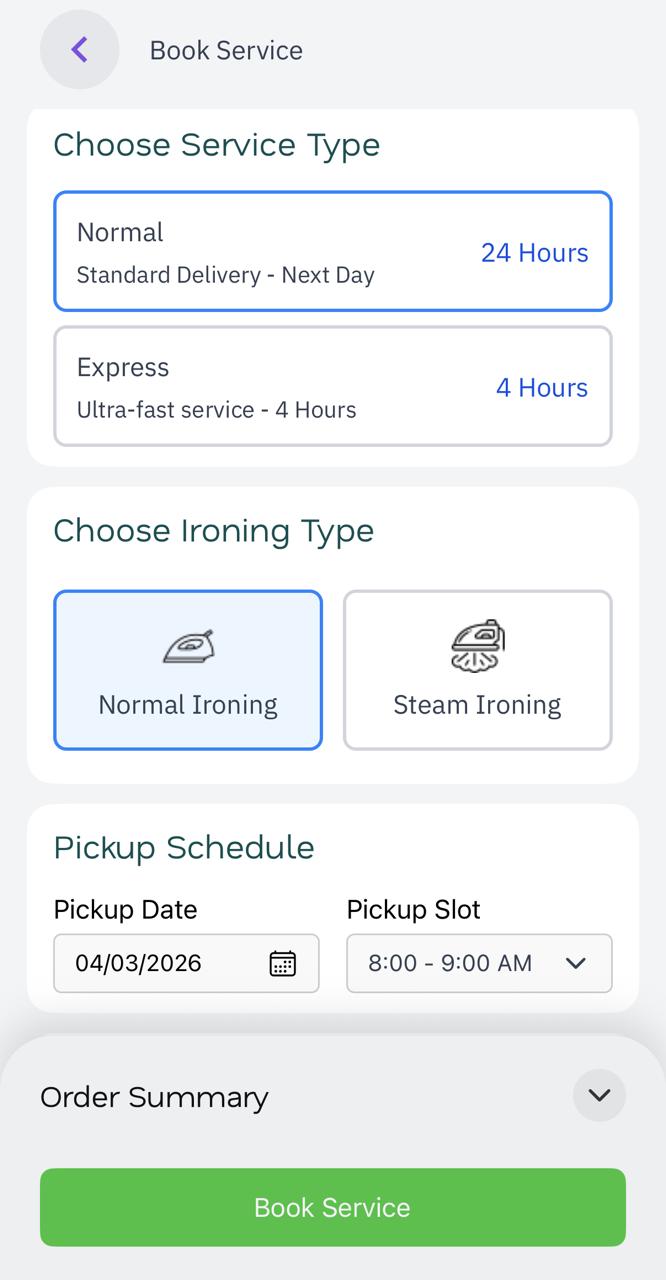
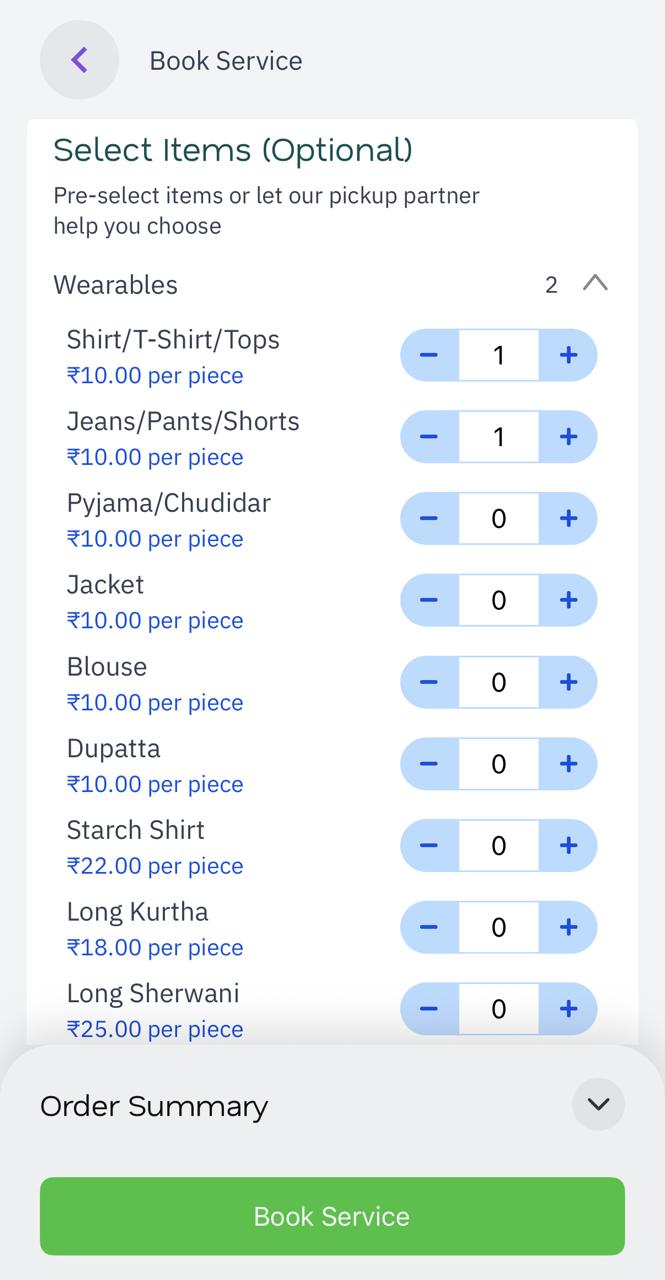
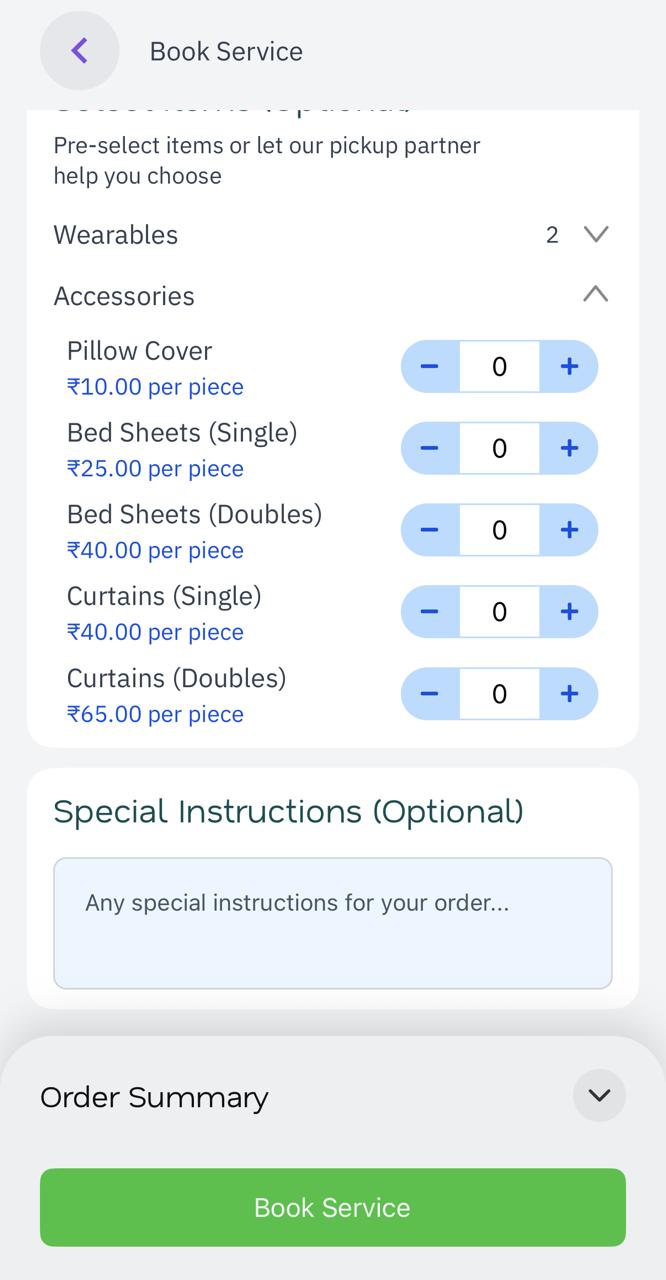
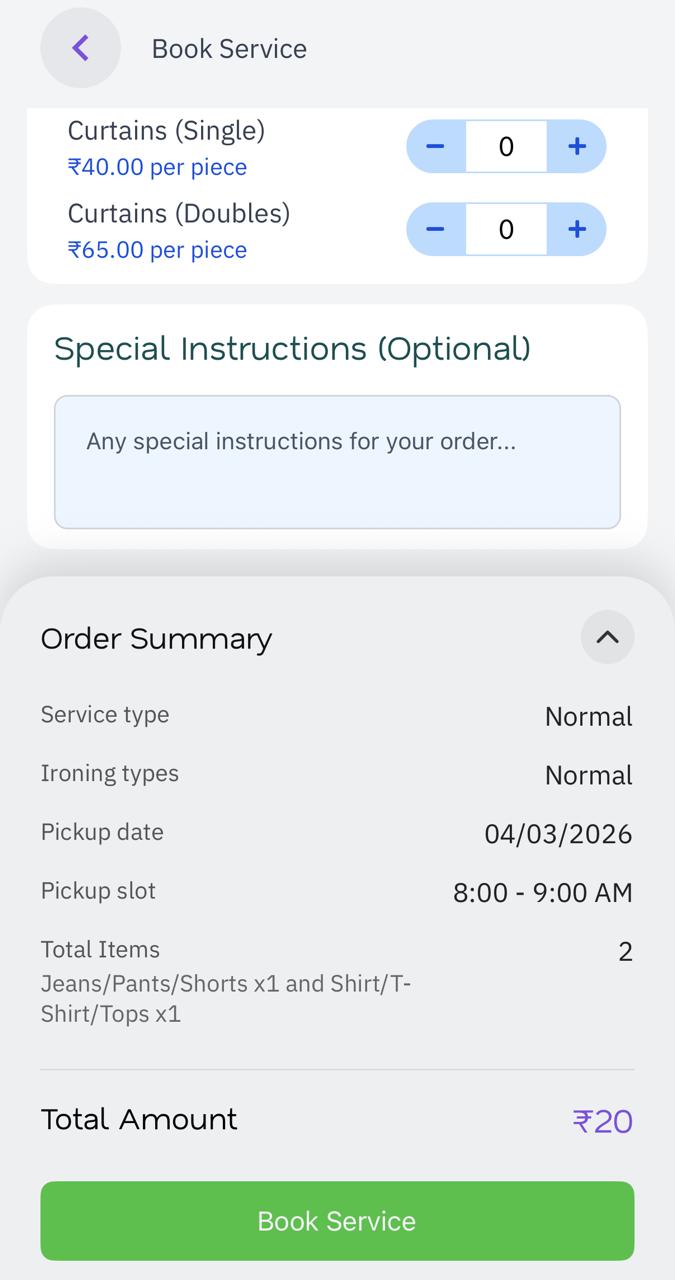
SocietyXpress Home - Service dashboard with booking and eco-friendly services
Key Impact
- 1800+ active customers acquired without paid marketing
- 2INR 5 Lakhs monthly revenue with positive unit economics
- 320+ supply-side partners onboarded and retained
- 4Cold-start solved in 2 societies through density-first GTM
- 5Platform extensible to new verticals without rebuilding core